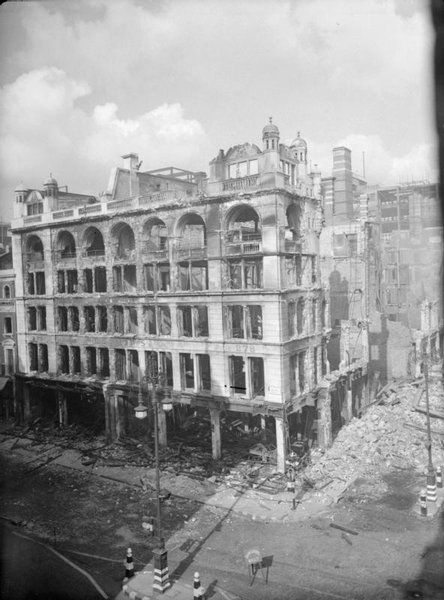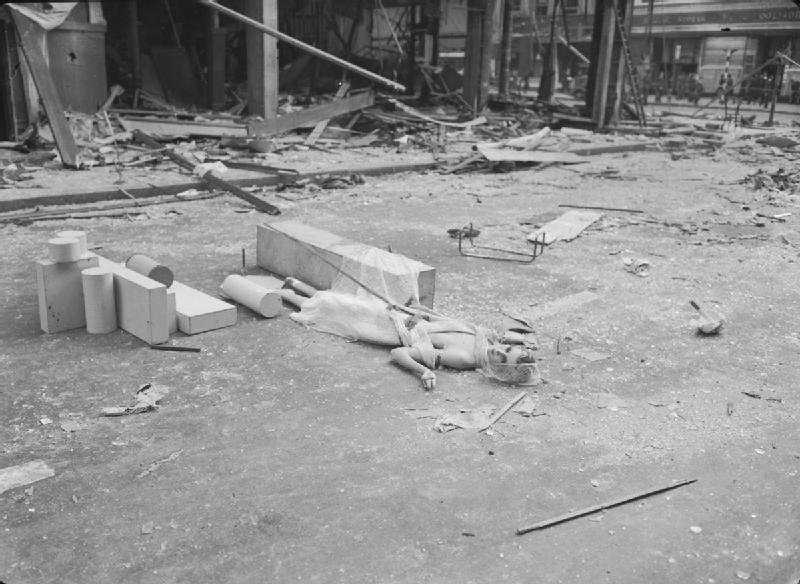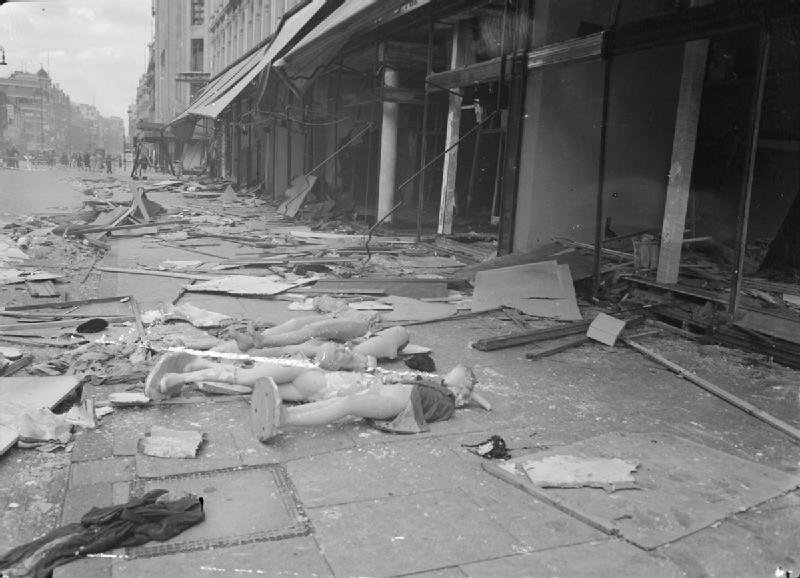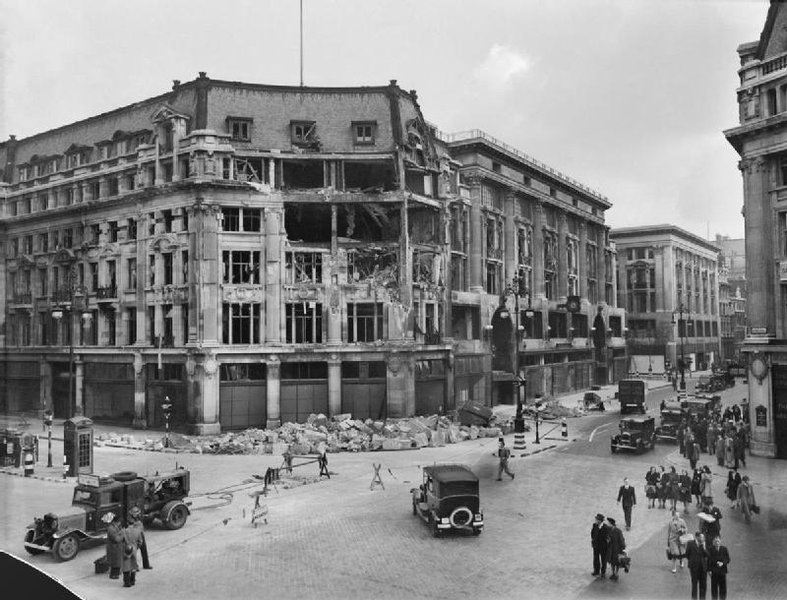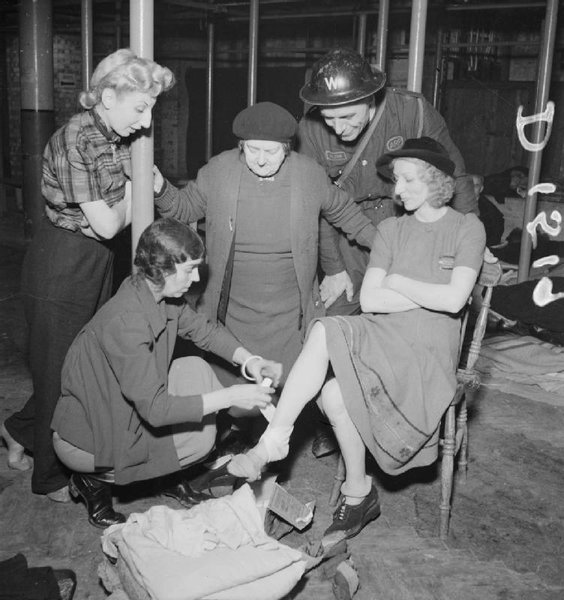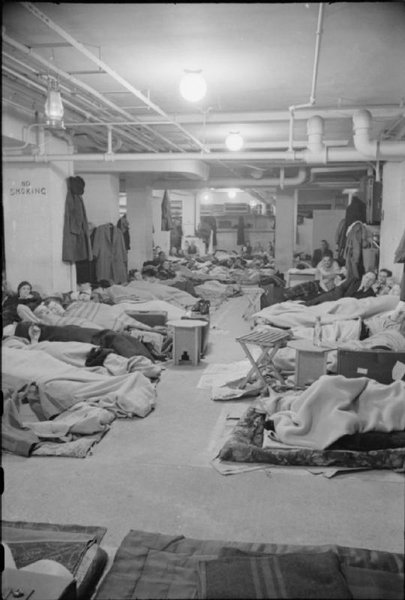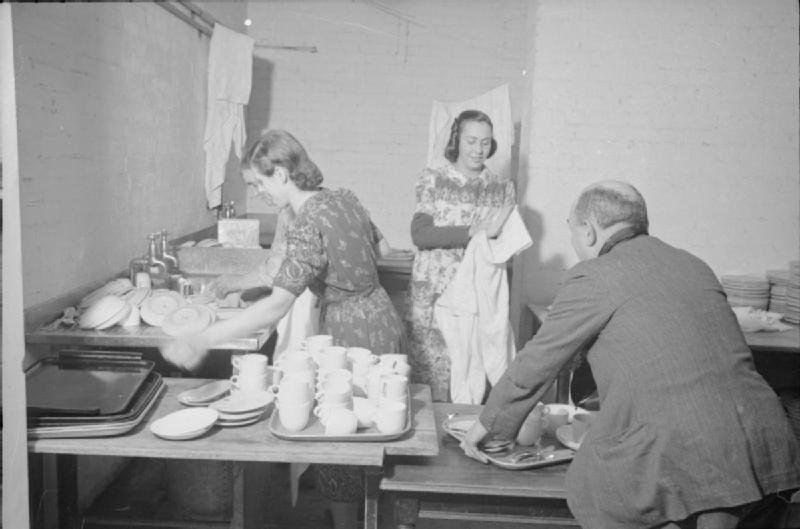

High Explosive Bomb at Broadstone Place
Description
High Explosive Bomb :
Source: Aggregate Night Time Bomb Census 7th October 1940 to 6 June 1941
Fell between Oct. 7, 1940 and June 6, 1941
Present-day address
Broadstone Place, Marylebone, City of Westminster, W1, London
Further details
56 20 SW - comment:
Nearby Memories
Read people's stories relating to this area:
Contributed originally by Franc Colombo (BBC WW2 People's War)
ENGLAND PART FOUR
When we got ashore we were met by nurses and volunteer women who made a fuss of us then took us to a big marquee given tea and sandwiches then to a room where our pay book was checked then given travel warrants and told to report to our depot. I arrived at Hounslow in the evening, after settling down I phoned my father to say that I was safe he was pleased to hear from me because by that time he heard the news of the evacuation, in due course the remainder of the battalion arrived, I learnt that quite a few were killed, wounded or missing, fortunately my friends where O.K, finally I met up with my officer and he wanted to know what happened to me. Soon as we were refitted we were posted on the Isle of Wight, we were expecting the Germans to invade, we had few weapons one rifle between two men some just had pitch folks or pick handles, bit by bit we received new weapons, by this time the battle of Britain started, we heard that London and other cities were being bombed, we had our share one bomb dropping on the cook house causing many casualties, luckily it was not meal time.
Our next move was back on the mainland doing training and route marches of twenty miles. I was due to go on leave but before going I had to see the company commander who told me that being Italy declared war on England and being that I came from an Italian family there was the possibility that if I was captured I could be shot therefore I could transfer to a non combat unit I told him that England was my country. When I got home I told my father about it and he told me that I should fight for my country, he also told me that Bastiano and Armando had been interned and he was trying to get them released.
Armando was interned because his mother Fernanda never liked England and sent him to an Italian school and was registered as a fascist. I remember one time when I visited Jinnie and fernanda was there and she said that she could not understand how I could go and fight against the Italians, I told her that they declared war on my country and if I came up against them so be it.
When I went round London I saw the destruction the bombers made, where houses and shops stood there was just a gap and rubble, fortunately round Edgware road they had no damage. In the evening I would visit my friends and we would go to the west end, for a drink it was strange to see so many uniforms and nationalities, many times we had to take shelter because of the raids. While I was on leave I contacted the red cross to see if I could get a message to Tinuccia, I was able to send a card to say that I was well, later we were able to correspond more frequent. Shortly after returning from leave we moved to Newbury, we were billeted on the racecourse just on the edge of town which suited everybody, Newbury was a friendly town and had quite a few places for entertainment.
While we were there Capt. Hill told me that he was being posted to another battalion and would I go with him, I told him that I had applied for a transfer to the airborne division and therefore I would not join him. On the 13th Dec. 1941 we went to Invarery Scotland for combined operation training, we had to live on board a ship in the middle of the lake and sleep in hammocks, we had some fun trying to swing into them but we soon got the hang of it, then we had to learn how to scramble up and down the side of the ship by a rope ladder into an assault craft, in the beginning we found it hard going but after a few times we were going up and down like monkeys. The exercise was landing on the beaches.
We had Christmas dinner with a pint of beer on the ship the rest of the day was our own. The following day the C. O. thought it would be a good idea that after all that food and drink we consumed the previous day we should sweat it out, so we were put ashore by platoons and do a thirty miles march finishing going up a steep hill which terminated on top of a cliff and scrambling down a rope and back to the ship . When our training was over we returned to Newbury, by this time I was receiving letters from Tinuccia, few and far between but at least I knew she was alright and that the feeling for each other was the same, in her letter she told me that one of her cousins had gone to Tunis and that she gave her some letters for me and that if ever I was there I could pick them up.
Our next move was to Camberly, in between manoeuvres we had a visit by King George the VI. I remember that it was a very cold day and light snow on the ground, it was decided that he would come and see us doing training in a field, our company was chosen to do physical training, we arrived at the field in our greatcoats an hour before he was due. When he showed up we removed our greatcoats and just in shorts and vest started to do P.T. when he saw us apparently he was annoyed and told the officers that we should return to our billets given a hot drink and a rum ration.
In April 1942 we were on the move again back to Scotland but this time we were going to walk, we were supposed to be chasing a retreating enemy, we did 130 miles in seven days. We arrived at Stops camp 5 miles outside the border town of Hawick. Contrary to the reputation that the Scots were mean we found them to be the most generous and kind hearted people we ever met, the hospitality of the habitants of Hawick was overwhelming, every man had a household to which he could go when he was in town and be sure of a meal, my friend Frank Vincent and I were taken in by mr. and mrs Nayler and treated as their sons.
Soon after settling down the anti tank platoon was formed I asked to be transfer to it because I was in it when we were in Shornecliff, soon after I was promoted to lance corporal. The training was hard but we were fit, one part was that with my section of 7 men we were taken in the glens miles from anywhere and had to live on the land for 48 hours making our way back to camp using a compass, in the morning we stopped at a farm to ask for some water to make tea, the farmers wife asked us what we had been doing, we told her that we had been out all night she invited us in and gave us a full breakfast and sandwiches to take with us, we finally arrived back in camp, we were not the first but we were not the last.
By this time I was made full corporal in charge of a gun, then came news that we were going on embarkation leave, the train to London did not leave till midnight Mrs Naylor insisted that Frank and I would have dinner with them and made us sandwiches for the journey, the train was packed and we had to sit in the corridor all night. Finely I arrived home and I was told that with fathers intervention Basil and Armando were released from interment. Soon after Armando was called to join the army. I visited all the family because I knew that it would be a long time before I would see them again, I shut it out of my mind that I might never return.
Then I visited my friends and as luck would have it they were also on leave therefore it was an occasion for a celebration and going to the West End and having a good time, one night we went to see Gone with the Wind, it was the rage then. All to soon leave came to an end I told father that it would be sometime before I would see him again, so I returned to Stobs Camp. We learned that we were moving out in a few days, Frank and I went into Hawick to say our farewells to the Naylers, they were sorry to see us go and wished us luck and a safe return.
The following night 9th of March we marched to the station and boarded the train for Liverpool the port of embarkation.
We went on board and taken to our allotted space, it was cramped but we soon sorted ourselves out and we had our old friend the hammock, then with Polly and some other chaps went on deck to have a look round saw some other ships which would make up the convoy. Our ship was the S.S. Cuba a French ship. The following we were shown our boat stations and boat drill.
Two days later we set sail and taking our position in the convoy. In the bay of Biscay I found it difficult moving around and I was seasick but it soon passed and I got my sea legs, it felt strange because I could move around without feeling the lurching of the ship. The days passed with P.T. lectures boat drills and other activities, several times we had air raids, guns going off every where then we went though the Strait of Gibralter and into the Mediteranian, then one day we were attacked by submarines, they managed to sink two ships, one was a troop ship the Winsor Castle, we were at our boat station and saw her sinking, the destroyers chasing every where dropping depth charges then picking up survivors. The following day we sighted Algiers, it was impressive with its white tall buildings, it looked nice till we landed.
Contributed originally by kenyaines (BBC WW2 People's War)
A few weeks after my family and I returned home to Bermondsey from our adventurous stay at Shepherds Bush, I was told that I'd passed the Scholarship, and was given a choice of schools.
We opted for St.Olave's and St.Saviour's Grammar-School, in Tooley Street by Tower Bridge. it was the nearest to home, also I wanted to go there and mother had a good report on it from a friend whose son was a pupil.
St.Olave's was closed in London and evacuated to Torquay in Devon, so I would have to join it there, and faced the prospect of being away from home on my own. When we were evacuated before, the family had been more or less together at Worthing, now I'd be 200 miles away with the added worry of them all being in London at the mercy of the german bombers every night. I was a bit apprehensive as well as excited. A few weeks later we heard that I'd been accepted by the school, and within another few weeks while the nightly air-raids went on unabated, I received my travel instructions.
On the day of departure, Dad took me across London by Bus and Tube-train to Paddington Station.
Of school uniform I had virtually nothing.
Clothing wasn't rationed yet, but was in very short supply, most of the clothing shops were closed or bombed out. It was to be another year before clothing coupons were issued and "utility" clothing appeared with the familiar CC41 label.
However, the school rules were relaxed for the duration, and the only mandatory uniform was the school-cap with it's sterling silver badge, and school-tie, which I obtained from the school.
We were met at Paddington by a well-dressed lady in her Thirties who was to be my escort. She told Dad that she would see me safely to my billet at Torquay.
Paddington Station had so far escaped the bombs. It was a busy place, with lots of bustle, and the occasional chuff and roar of a Great Steam Locomotive as it took off for the West Country, pulling a train of cream and brown coaches.
The Escort Lady led us to our Train, Dad saw me off and we were on our way.
The 200 mile journey took five hours, and was a bit boring until we got past Exeter.
Then the scenery changed dramatically as the Railway-line followed the coastal route.
The Train went in and out of short rocky tunnels on it's way round the coast, with the Sea on one side and the countryside on the other.
The colour of the ploughed fields changed from brown to the red soil of Devon.
I'd never been on a Corridor-Train before, and it was a novelty for me to stand there out of the Escort's sight with my head out of the window, catching glimpses of the huge Green and Black Engine with brassware gleaming in the sunlight, as it rounded the bends ahead of us.
However, I suffered for my foolishness.
By the time we arrived at Torquay, I had painful wind-burn blisters on my lips.
The Escort-Lady said that she did her job
on a voluntary basis, and was going to stay for a few days at the Palm-Court Hotel by the sea-front until her next assignment.
I later saw that this Hotel was quite a grand place, so she must have been a well-to-do Lady doing her bit for the War-effort.
She duly deposited me at my billet in Sherwell Valley Road, on the outskirts of Torquay close to the Picture-Postcard Village of Cockington, a famous Tourist attraction, it had picturesque cottages, and a thatched Smithy, where you could see a Blacksmith at work and watch a Horse being shod if you were there at the right time.
The village was only a short way away. At the end of the road where the houses finished, a footpath led through an Orchard and across a couple of meadows past
farm buildings.
It was a nice walk, if one avoided the Cow-pats in the lush grass, and the local Farmer was friendly, he always let us go in to see the animals, there were horses and lots of Black and White Cows, sometimes we saw them in the milking parlour.
I was to stay with Mr and Mrs B, their fourteen year old daughter, Doris, and small son of about five.
There was already a Boy from St.Olaves staying there with whom I was to share a Bedroom and Double Bed.
His name was George, and he was a year older than me, so he was in the next higher Form at School.
I'd vaguely known him at home, as he lived just a few streets away, so we were to get on well together. George was an only child, a quiet, studious chap. I was glad he was there as he helped me learn the ropes at school.
For the first week or so, I was very homesick, and silently cried myself to sleep every night worrying about Mum, Dad and the Kids at home in the Shelter with the Blitz going on. I think that's when I learned the power of prayer, and to always have faith in God.
I was so relieved when my first letter came from Mum. I just knew they'd all be OK from then on.
The B's were quite good to us, but Mrs B, or Aunt Flo, as we called her, had her own fixed ideas about everything, she could be quite unpleasant when she wanted to, although she was kind to us in her way and meant well.
Theirs was a nice modern semi-detached House, with a long back-garden sloping down towards it. Inside all was spotless and neat. Lace D'Oyleys on the dining-room table and all.
The first thing that struck one on entering was the all pervading smell of boiled Cabbage.
As part of her morning ritual, Aunt Flo would put a Steamer of Cabbage on the Stove to boil at about eight o'clock, for dinner at twelve, by which time it was reduced to mush.
Other than that, she wasn't a bad Cook, the only thing was that her idea of the quantity of food needed by growing lads didn't coincide with ours. George and I were always hungry, as portions were small and there were never second helpings.
She sometimes cooked a Milk-Pudding called Junket which I'd never heard of before. It had an Almond-like taste, and was quite nice.
St.Olave's was "billeted" on Torquay Grammar School, about twenty minutes walk away. On our way there, George and I would stop at the Village Bakery and each buy a "Halfpenny Batch Loaf", actually a large Bread-Roll. We'd munch the warm fresh bread as we walked to School.
All our spare pocket-money found it's way to the Baker's or the School Tuck-Shop, where they sold pop and biscuits. But we always had to make sure we saved enough money for essential School items, such as ink and pencils.
School was a bit strange at first, but I soon got to like it and fitted in well.
The Masters all wore gowns and had nicknames given to them by the boys. My Form-Master was "Charlie", really Mr Charlwood, and Dr.Carrington the Headmaster was "Carrots", another one was "Boggy Newmarsh" our Latin Master.
We shared the School Buildings with our hosts, Torquay Grammar School, so our hours were somewhat irregular. Most days we started at 1pm and finished at 5pm, we also went to School on Saturday mornings.
The time lost was made up by us having about three hours Homework every day.
The B's home wasn't really a very happy one. Aunt Flo was MrB's second Wife. The first one had died when the little boy was born.
Aunt Flo doted on the boy, and spoiled him, but seemed to have a down on Doris, who'd just left School, and hadn't yet started work.
When the big Air-raids on Bristol started, MrB was sent there on Bomb-damage repair work, as he was a Telephone Engineer.
He was told that he'd be away for some time, only coming home for the occasional weekend, so they decided that Doris should stay at home and help Aunt Flo in the house until he was back home for good.
Doris was a nice quiet girl, tall and thin with ginger hair like myself.
I felt sorry for her, as Aunt Flo was always scolding her and treated her like a Skivvy, she was everlasting dusting and polishing and sat quietly doing her embroidery in the evenings, but she always seemed cheerful and happy when she came out with us, so I suppose she'd come to terms with things. She told me she wanted to train to be a nurse when she was old enough.
We soon got used to Aunt Flo and her ways, and learnt how to humour her. I used to get the job of holding up her skein of knitting-wool on my arms, while she wound it up into a ball, chatting all the time.
She told me that she was born in Newton-Abbot, a market town about fifteen miles away, and had lived there until she was married.
She'd worked as an Operator in the Telephone Exchange since she was a teenager, and met her husband there.
Apparently, she'd married late because she stayed at home to support her invalid Mother, so she had good reason to feel frustrated really.
One day, Aunt Flo showed me a photograph of herself in a long dance dress, taken when she was younger. I thought she looked very nice with her wavy blondish hair. She told me that she used to have it "done" at the Hairdressers every week in those days.
My time in Torquay passed happily enough, and we made the best of things. The only real downside was the long walk to school, as there were a lot of hills and it always seemed to be raining during the Winter.
However,Torquay was an excellent place to be at in the Summer.
We had some good times on the beach. George and I would go home that way sometimes and stay for a while, but one hot sunny day, I came to grief.
We went into the water, and it was lovely, but we had no towels with us, and foolishly dried in the sun when we came out.
George got away with it, as he had a dark skin, but with my Ginger Hair and Freckles I wasn't so lucky. By the time we got home, my Chest and Back were really sore, and by bedtime I was covered in Salt-Water Blisters.
I was in agony for a couple of weeks and didn't get much sleep, but I managed to keep it from Aunt Flo.There'd have been hell to pay if she'd found out we'd been in the Sea on our own. That was forbidden as neither of us could swim. It can be a bit dangerous down there, with the undertow from big waves.
Another time, we went down on to the Lower Promenade, intending to explore round Corbyn's Head, a Headland jutting out into the Bay. Although it was sunny, it was also windy, and there was a sudden squall. We turned to go back, but the Sea had got rough, and with the tide coming in, big waves were breaking over the steps on to the lower Promenade, some of them splashing over the top railings.
All we could do was make a dash for it between the waves, and eventually we made it to the stairs leading to the Upper Promenade, encouraged by the small crowd watching the action from behind the railings up there.
Needless to say, we were soaked to the skin, but escaped Aunt Flo's wrath by saying we'd been caught in the storm, which was true anyway.
One afternoon during a lesson in my first term at school, The Headmaster came into the form-room and I was called out. With my heart in my mouth, wondering what I'd done, I hurried to him. He smiled when he saw my worried face. "Come with me!" He said quietly. "You have a visitor."
To my astonishment, I found my brother Percy in the Head's Study seated with an elderly distinguished looking man. After my first surprise, I greeted my brother gladly. Dr. Carrington introduced the Gentleman as Dr. Platt, the County Education Officer.
Percy had been evacuated to Exeter, and was lucky enough to be billeted with Dr. Platt.
He had told him that I was at Torquay with St. Olave's, so when the good Doctor came to Torquay on a routine visit, he brought Percy with him so that he could see me. We were allowed to sit and chat in the Secretary's office while Dr. Platt conducted his business with the Head.
Percy said that Dr. Platt had a big house just outside Exeter, and he was happy there as the Doctor was a very nice man. Our sisters, Iris and Beryl were also at Exeter, billeted together. He told me that the schools in London had closed again because of the bombing, and all the schoolchildren evacuated. It was a lucky chance they'd come to Devon.
We spent half an hour or so exchanging news, then they had to go as Dr.Platt had other calls to make.
When Christmas came, Dad came down to Exeter and stayed for a few days. I went over from Torquay and stayed at my sister's billet, so we all spent Christmas together. I don't remember much about the place, except that the garden of the house backed on to the river Exe. It was cold and damp while I was there, with mist rising from the river.
Percy's luck had run out though, The powers that be had decided that Dr. Platt should take more evacuees in his big house, so Percy was moved out and a family installed.
Percy's new billet was with an old army major who was a bit of a martinet and resented having to take in an evacuee from London. Dad had a few words with him when he saw the situation, and the upshot was that Percy went home with him to London.
He had passed the exam for a Technical School, and got a place at the Borough Polytechnic which was open again.
Back in Torquay, we had a cold winter but Spring was soon on the way.
The B's House had a big garden, and with all the publicity about "Digging for Victory", I got interested in gardening and prevailed on Mr.B to let me have a patch of my own. He was only too glad, and gave me a
decent sized plot.
One Sunday Afternoon, I dug my plot over, and thought it needed some manure, so I got a couple of paper carrier-bags and went down to the Farm.
The Farmer said that Pig's manure was best for the garden, and I could take all I wanted. When he saw my Carrier-bags, he said I'd need to put one inside the other, as the Pig-manure was a bit damp.
With the double bag full of the stuff, it was quite heavy, and I hadn't gone far when the handles broke. I hugged the bag of smelly manure to my Chest and hurried home. By the time I got there, it was seeping through the paper, but I made it up to the garden, just about.
I abandoned my old gardening coat and managed to clean up a bit before going indoors, but I wasn't very popular with Aunt Flo when she got a whiff of me.
Things went on quite pleasantly until one Saturday as I walked home from school on my own. I took the usual shortcut through the park and was set upon by two boys of about my own age. It turned out they were also evacuees from London, but they thought all Grammar-School boys were cissies and needed beating up. I went home with a few bruises and a black eye to explain away, but I think I gave as good as I got, anyway, one of them retired early with a bloody nose.
As Spring gave way to summer, life got a bit more interesting as we went out a lot more. There was much to see around Torquay, and always something going on in the town.
One public holiday,when we were down there
we saw that the Town Hall was decorated with flags and banners, and there were a lot of people about, then we heard the sound of Bagpipes approaching and a parade of servicemen marched by. I don't know what the occasion was in 1941, but there were a lot of airmen there in their blue uniforms from the nearby RAF camp. They all wore a white flash on their forage caps, so I think they were all trainees.
At last, the end of the term came. George and I both went home for the Summer
Holidays, as did many of the boys at School. The Blitz had died down by then, and it was deemed safe to be in London for the moment.
To be Continued.
Contributed originally by DOUGLAS ROTHERY (BBC WW2 People's War)
Chapter IV - Royal Encounters
In between the 24hr guard duties, other training continued, be it P.T. Weapon training, Education, First aid and of course Ordinary drill and Fatigues etc., every moment of the day was accounted for.
It wasn't many days after my Bank Guard that I noted with pride and panic, my name down on Daily Details for Buckingham Palace Guard. I was conversant with the procedural drill on arrival at the Palace, the changing, the double sentry drill on the pavement outside the railings of the palace whenever their Majesties were in residence etc., but wasn't so sure of the forming up on the square of my particular guard. I knew that I would have to 'Bloody Well Soon Find Out', so I discreetly watched the next Guard mount from a safe distance, (not allowed to stand and stare). But it didn't give me much confidence, because as soon as the order by the Sergeant Major was given,
'GET Ooooooon Parade'!
all that I could see was a mass of scarlet tunics and Bearskins criss- crossing in quick time trying to get to their respective Guards, St James Palace Guard being the senior followed by the Buckingham Palace Guard then the Waiting Guard, which parades in abeyance to replace those deemed as not suitably turned out by the inspecting officers. I rather despondently crept away not looking forward to my initiation and can only hope I don't have to learn by my mistakes.
On the day of my inauguration the Drummer blew the call to warn those who were for guard duty, finishing with a call called "TAPS the words of such known universally throughout the Brigade as "Youve Got A Face Like A Chickens Arse" thus reminding you that you have 20minutes before parade.
One of my chums gave me the once over before I gingerly make my way down the stone stairway trying not to crack the highly polished uppers of my boots, rifle in one hand, kit bag containing cleaning materials etc. suitably labelled for Buck House in the other for it to be taken their by transport. In all of this time, the band has been playing some known and some unknown airs, of which I am in no mood to appreciate. The officers of respective Guards, are patrolling up and down, also the Sergeant Major. Briefly all goes quiet, the next moment pandemonium when the Sergeant Major coming to a halt, bellowed out.
'GET Ooooooon Parade'!
This is it!
My heart misses a beat as I become part of this mass stampede in quick time, also trying to figure out where my guard marker is whilst at the same time trying to protect the precious hours of spit and polish on my size 11's from some other clumsy clots. These problems intermingled with orders being shouted from about half a dozen different W/Officers, I eventually make it.-Phew!- Now steady down.
After the formalities of the dressings, the roll call etc, comes the fixing of bayonets. The right marker marches forward the regulatory paces to give the signals for the fix, another panic sets in 'Thinks' Did I replace the bayonet into its scabbard after giving it its final polish! Its too late to check now. The next moment the order was given (FIX )- Yees"-"Thank Goodness," so far so good. Now for the inspection by the Guard Officer and"his entourage, Company Sergeant Major, Sergeant and Corporal, whatever fault one of them misses the other will pick up, whilst the band plays some lilting music which helps to drown the expletives being afforded to some unfortunate.
We march out to the usual tune on leaving barracks then to a stirring march to which we rightly and so proudly swagger along to, our hearts swelling with pride in the knowledge that we are the envy of the world. Somewhere along the route the guard W/Officer gave the command 'Escort to the colour' and being already briefed on what to do, I double out to the RH side of the road as part of that escort. whereupon on nearing Buckingham Palace we are recalled back into the ranks
.My first Stag [Guard Mount] was outside the front gates of the palace and I felt very proud and privileged yet at the same time extremely apprehensive after a warning from a experienced old sweat not to allow any of the public to stand by your side for photograph sessions as this could find its way not only for publication but also Regimental scrutiny looking for lack of poise or posture etc; also to be alert for the authoritive Regimental spy within passing taxi's, so with this in mind, no sooner had a damsel or anyone else posed themselves by my side for a photo, I would start patrolling [Spoil Sport].
On returning to barracks the next day someone called out that the official photographer was downstairs, so being still in guard uniform I took advantage of this opportunity which I believe cost me 2/6d (12&1/2p) including frame, which my parents were to proudly display.
Back to the varied training, where within a few days I had my first St James Palace Guard, which was fascinating , because the ceremony of the Changing of the Guard is in the courtyard within the palace overlooked by the balcony from which all historical proclamations are made. My patrolling on one of the sentry posts was under an archway, where, over the many years, the tip of the sentries bayonet had cut deep grooves into the stone roof. I bet that could tell a few stories!
My father being an ex soldier of the 4th Queens Own Hussars, gave me the following advice as I was leaving home to join up.
'Never volunteer for anything'.
But when volunteers were requested with the promise of a day off duty if we took part in an experimental inoculation, well, that was too good to miss! Three days later I was allowed out of bed! Never again, the shaking, aching and vomiting, we never found out what it was for but rumour had it that it was an anti malaria experiment. My advice is:
'Never volunteer for anything'.
Went out with the three musketeers, (whom I have already introduced), they
being older serving soldiers were in possession of civilian clothes passes. These could be applied for once you had served 12 months in the battalion, I still had 9months to go, this would then entail buying a suit (I am afraid that my 50/- (2 Pound 50p) one wouldn't pass the required standard on all counts). It must be smart and of a specified design and colour then inspected and approved by the Adjutant, anyway, I wasn't financially embellished at this short period of service to be able spread my limited retainer to cater for such extravagance. After wandering around Hyde Park and Speakers Corner, we decided to quench our thirst in a nearby Public house. The three six footers plus in their civilian clothes and wearing the traditional trilby hats (head gear must be worn), were the first to enter amid a buzz of verbal activity, which immediately ceased until I in uniform went over to join them. It was noticeable that, had there been any nefarious deals taking place, my presence must have assured them that we were not the 'BILL' but just the 'BILL BROWNS.'
I learnt it was common practice on returning to Barracks to bring back a fruit pie for the Guard Commander, this would be discreetly placed near the Tattoo report whilst being marked in, in the hope that this sweetener would be acceptable, especially if you were not quite within the second of the three essential conditions, namely (1) clean (2) sober and (3) properly dressed in uniform- alternately civilian clothes.
Professional jealousy would surface mostly between the Senior Warrant Officers of either Coldstream or Grenadiers regarding Regimental history, if the opportunity should arise. Such came the opportunity, when both battalions happened to be drilling at the same time on their respective halves of the square. R.S.M. Brittian of the Coldstream, (reputed at that time to have the loudest voice in the British army) bellowed out to his men (not as a compliment I may add) that they were drilling like a squad of Grenadiers. This was responded to with equal uncomplimentary fervour from R.S.M. Sheather of the Grenadiers. Apart from this light-hearted bantering, it never showed itself in any other way.
Other than our usual drill or musketry training, a few hours each week were spent on Stretcher Bearing (SB) courses, and the order of dress for this parade was Khaki Service dress and not Canvas Fatigue. On this particular occasion we were informed in the usual manner, i.e. Daily Details, that S.B's would parade at a certain time. After forming up on parade, the unfortunate Sergeant reprimanded us for not being in Canvas Fatigue. It was explained to him that Service dress was the usual uniform for Stretcher Bearers, whereas he had interpreted the S.B. as 'Spud Bashing' [ Potatoe Peeling] a well known term by all, especially the miscreants. (I might add that he wasn't allowed to live that down very easily among his fellow compatriots for quite some time)!
Guard duties were on average two per week, so I was now pretty conversant with the procedures, also the many different sentries orders for each of the various guard posts around the Palaces. One such order, among the many, at the front of Buckingham Palace was to keep prostitutes away from the railings, a task the Police on the gates, knowing the ones that come to ploy their trade, would soon sort out, also the onlookers obstructing your beat whereby a sharp tap on the ankles from a size 11 was the same interpretation in any language!
I was now entitled to a well earned rest, which was granted in the form of 10 days furlough where on arrival home after the customary greetings, the next question invariably would be, 'When do you go back'? This was the last thing you wish to be reminded of.
When it was time to return, I fortunately met another Grenadier Guardsman from my battalion at the railway station, who, although from a different Company we knew each other by sight. He spoke in an educated Oxford accent, smartly dressed in civilian clothes, bowler hat, brigade tie and carried a neatly rolled umbrella. On entering the carriage he rang the service bell and ordered a couple of whiskies which helped to dispel the gloom of departure. He then told me that he had already received 7 days C.B. for impersonating an officer. Apparently he, in his mode of dress, on returning one evening to Barracks was saluted by the sentry believing him to be an officer, and he in response acknowledged it by raising his hat (the normal response from an officer). This didn't go unnoticed by the Sergeant of the Guard, who didn't approve, neither did the Commanding officer. When we were nearing the barrack gate on return, he put the umbrella down his trouser leg and walked into the guardroom with a limp claiming that he had hurt himself whilst on leave, his explanation was accepted. Eventually he was to take up a commission in another Regiment and was subsequently killed in action. (Never volunteer etc. etc.)
Each Friday you could guarantee to having two boiled eggs for tea a ritual carried forward from my Depot days and no doubt from many years before. On this particular Friday, the eggs were unduly hard and black on being shelled, this therefore didn't satisfy most of the recipients who began to vent their anger by letting fly with eggs 'Properly Fired'. Before I had time to take cover the door suddenly opened and the Picquet officer plus escort marched in, thus restoring order. The men on being asked in the usual manner, ' Eeney Compleents'? several dared to respond. The Officer with the Master cook now in attendance seemed to agree there was reason to complain whereby no disciplinary action took place. Hereafter eggs were to be boiled on the day of consumption - only joking!. It was also the custom of having Prunes and Custard for Sunday's luncheon Sweet thus ensuring Regimental regularity!.
Now classed as an old soldier on double sentry duties, meant that I would be responsible for giving my sentry partner the regulatory signals for saluting and patrolling when called for on Palace guards etc. On one such occasion outside Buckingham Palace, at approx. 5am, therefore very light traffic and few pedestrians and no Police on the gates, along came a troop of 'Westminster Cowboys', these were Westminster refuse collectors, so called because they wore wide brimmed hats with the side brim turned up. They were no doubt reporting for work and as they drew level on their horse drawn carts, I signalled to my partner, with the regulatory three taps on the pavement with the butt of my rifle and we gave them the 'Present Arms', you should have seen their faces as they looked about in anticipation of seeing a member of the Royal family entering, you had to be very careful though, you never knew who might be watching.
Most complaints came from old retired officers who would walk past in civilian clothes for the sole purpose of getting a salute, so any civilian wearing a dark suit, bowler hat and carrying a neatly rolled umbrella, you took no chances and would salute giving them the benefit of the doubt. On another occasion a Troop of Household Cavalry were passing by on their way to Horse Guards Parade and I naturally Presented arms, they in response gave the customary eyes right and sounded the Royal salute on the trumpet, I was waiting for the officer to give the eyes front, he in turn was waiting for me to come down from the Present, eventually, as they got further and further away, I thought I had better do something, even if it meant waving goodbye, so I came down from the Present and he then gave eyes front, plus no doubt a few other chosen words, he being in the right. I was expecting to hear a complaint about this on returning to the Guardroom but it was not reported, misdemeanours committed on public duties warranted double punishment.
Later in the week one of my postings was at the rear of the Palace and before doing so the W/O of the guard, stated, 'He didn't want reports of 18ft guardsmen patrolling along by the perimeter wall'. Apparently this phenomenon was reported by a civilian in the street outside about a previous guard, where it was surmised a Guardsman had placed his Bearskin onto his bayonet on the end of his rifle and paraded it along the top of the wall.
For posterity I had better relate a rather amusing incident of Royal character whilst I was on that sentry. My post was near the stone steps leading down to the lawn. I heard children laughing and chasing each other, whence one of them a young girl of about 7 or 8yrs of age ran down the steps onto the gravel path of my beat. On recognising her to be Princess Margaret I Presented arms, she ran back up the steps to her sister giggling, no doubt bemused by the reception, repeated the performance.
whereupon I again Presented arms. I assumed she was about to do it again when I heard a male voice, whom I imagined was a member of the staff , usher them inside.
I heard of a not so Royal incident which occurred on Buck; Guard by a Guardsman Cosbab from our No2 Coy. Apparently during a very humid night, he had left his post and was discovered by the night patrol cooling off his feet in the water of the Victoria Memorial opposite, knowing him and his previous antics, I quite believe it. Although very likeable he was a proper Jekyll & Hyde character with a unpredictable devil may care attitude.
The lining of the street was part of our itinerary, which took place for the reception of His Majesty the King of the Belgians, Prince Michael of Romania, the openings of Parliament etc. etc. On one of these occasions because of the inclement weather, order was given to don capes. It was then revealed how the old sweats managed to square up their capes so precisely, when parts of cigarette packets etc. fluttered suspiciously to the ground. Another wheeze I was to learn was that the back tunic buttons were a tourist souvenir attraction, so it was wise not only to sew them on, but to thread a tape through the back of the buttons to help prevent this activity.
Contributed originally by richard_storer (BBC WW2 People's War)
A Boy's Wartime Memories of London and Dorset
Richard Storer
London
I was born in Hampstead, London in 1933 and though I was too young to understand the concerns and worries that my parents and other adults in the family must have had during the period leading up to the declaration of war, some of it must have been absorbed by my imagination as I have clear memories of digging a large hole which was to be an air raid shelter in our back garden. I don't suppose I had any idea of what an air raid shelter was for but it must have been clear to me that it was something that was going to be needed and that digging a hole was the initial requirement. I also remember that I was careful to dig my hole with a shelf cut into the soil on one of the sides so that I would have somewhere to put a bottle of Heinz tomato ketchup. Presumably I must have overheard talk of stocking shelters with supplies of food and tomato ketchup was obviously something that I did not want to be without.
Amongst my other memories from those times leading up to the war are those of Walls ice cream men pedaling their tricycles round the streets ringing their bells and, when stopped, handing over water ices which were contained in a cardboard tube of triangular cross section. You had to push the ice up from the bottom of the tube and I can still taste the soggy cardboard that used to end up surrounding the business end of the ice. I also remember coal being delivered to London houses by horse and cart, being taken to have afternoon tea at Selfridges and the wonderful model train layout that ran all round the first floor in Hamleys' Regent Street toy shop.
Dorset
An aunt of mine had a house in the village of Chideock in Dorset and I was sent out of London to live with her just before the war started. I was not really aware of why I had been sent to out of London as the move was just like the other Dorset holiday visits to my aunt that had gone before. The reality of what was happening in the world was made a bit clearer when Hobbs, who looked after my aunt's garden, told me on the afternoon of 3rd September 1939 that we were at war with Germany. Hobbs must have been dismayed at what was happening in Europe as he had been lucky to survive the whole of the First World War spent in the trenches of France and Flanders. Many others who served in the same trenches never came home to their Dorset village homes.
To begin with, nothing seemed to alter in West Dorset. We still went down to the beach. The beach huts remained in use and the cafe still dispensed trays with pots of tea for the grown ups and ice cream for the children. Slowly, however, things started to change. I remember one day when we were on the beach that a camouflaged aeroplane, friend or foe I know not, came hurtling in from the sea just feet above the wave tops and lifted up to pass over our heads and disappeared inland along the deep valley that led to the village. Eventually the cafe was taken over by the Home Guard and the cart track that we used for walking to the beach was rebuilt in concrete so that a continuous stream of lorries could wend their way to the shore to be loaded up with pebbles and then return inland with their cargo along the other tarmac road to make even more concrete to be used in the war effort. That concrete track still exists and, though a bit cracked here and there, is still serviceable and in daily use. Sitting on the beach we would sometimes see depth charges or other explosives erupting in the water further out to sea in the Channel. One evening we watched a dog fight by some aeroplanes in the sky just off the coast, eventually seeing one come down, trailing smoke as it dived seawards and followed by a lone parachutist who landed in the sea off Lyme Regis. We subsequently learned that he was a German.
At the beach, the mouth of the valley between the cliffs was eventually filled with a huge wall of scaffolding and the beach itself was dotted with concrete cube obstacles about five feet square and with sloping tops. The bits of low cliff that did not pose a major obstacle to an invading army were wired off and laid with mines. Post holes were dug in the roads leading from the beach and also along the main coast road that ran East West through the village. These holes had removable caps and, at the side of the road, were stored lots of substantial, iron, antitank constructions which would be slotted into the uncapped holes once an invasion seemed imminent. I also remember, and looking back I cannot believe how naive we must have been, that my cousins and I ventured down to the beach and set up watch on the night of the full moon that had been identified by the press as the likeliest time for Hitler to try and invade England. Thank heavens he never came.
Though I remember having been given a gas mask I never remember having to carry it with me in one of the square, brown, cardboard boxes suspended by a bit of string over the shoulder that one sees so often in archive film of the period. I do however remember that another aunt of mine living in London had a shelter bearing some government minister's name ( not Anderson ) which stood in the middle of her front hall and resembled a large rectangular dining room table made out of solid metal of some kind. The idea was that anybody sheltering underneath it would be protected from collapsing walls and other falling rubble should the house be bombed. This aunt's shelter was always draped with a large table cloth and usually sported a pot plant or a vase of flowers placed carefully in the centre. This shelter was never called into service but, towards the end of the war, a V2 rocket did land two houses away down the street and the family portrait of "Uncle Sam" (circa 1820) was damaged by flying debris. My grandmother never forgave " that dreadful Mr Hitler" for the outrage.
I was a wolf cub whilst living in Dorset and I remember on a couple of occasions being put on an open lorry with Arkela and the rest of the cub pack to take part in processions through the local town of Bridport during Spitfire Week or Salvage Week or some other week designed to help the war effort. All sorts of metal was collected at this time; aluminium cooking pots to make aeroplanes and all the iron railings were removed from the tops of the low brick or stone walls which had commonly fronted many houses before the war started.
When rationing was introduced my aunt adopted what, in retrospect, I now realise was a very sensible routine with the rations for the household. She put to one side all the butter, sugar and jam that she required for the week's cooking and, from what was left over, everybody was then issued with their own personal tea time rations for the week. The top of the tea trolley became covered in pots, jars and other containers each containing the jam, sugar and butter belonging to the child whose name appeared on the container label. We were at liberty to eat the lot at Monday tea time if we wished but we would not be issued with any more until the next week's rations were distributed. It was a learning exercise which taught us many disciplines: self control, fair shares, planning, frugality, contributing to the common good etcetera. Like many families during the war, we augmented the shop bought rations by keeping chickens, ducks and rabbits and by growing lots of vegetables.
I remember soldiers being billeted in the village. We had a couple of Highlanders with us in my aunt's house and a piper used to play through the village in the mornings presumably to collect the scattered Scotsmen all together before they went off to their daily duties. I also remember Royal Welch Fusiliers with the black flaps sewn to the collars on the back of their khaki battle dress; flaps which the regiment had worn for hundreds of years ever since a previous Colonel had decided that his soldier's tunics needed to be protected from the white powder on the pigtails of their wigs. At a time when the country faced the ultimate challenge for survival, only the British could go to war in the twentieth century believing that it was still important to protect their battle dress from wig powder. Long may such traditions endure. The only 'action' that came anywhere near us in our Dorset village was one night when a German bomber, presumably fed up and wanting to go home, just jettisoned his bombs which landed harmlessly on the hillside on the outskirts of the village but provided a topic of conversation for several weeks afterwards.
In 1942 I left my aunt's home in Dorset moved to Suffolk to join my mother and stepfather.
After the war ended in 1945 I went back to look at the home where I had been born in 1933. The house where we had a flat was still there but a nunnery that was 2 door away had been bombed and apparently some of the resident nuns were killed. I also went down the road and round the corner to take a look at the nursery school that I used to be taken to in the mornings. As I walked towards it, memories of the smell of Jey's Fluid which was liberally used in the toilet came back to me and I wondered if the smell would still be there. The smell had gone and so had the nursery school, bombed like so much else in London.
Contributed originally by saucyrita (BBC WW2 People's War)
Rita Savage (nee Atkinson)
A child’s view of the war.
In 1939 I was nine years old and living in Peckham, London S.E.15. It was 3rd September 1939 and I remember sitting on the back steps that led into the garden listening to my mum and dad discuss the advent of the Second World War. My parents had of course lived through the First World War. My dad served in the Army along with his brother and father; they were all in the same regiment I am told. My uncle Ernie was killed in France but my dad and my grandfather both survived.
This particular day as I sat on our back step, dad had switched on the wireless and we heard our then Prime Minister, Mr. Chamberlain broadcast that we were at war with Germany. A few minutes later we heard the distinctive wail of the air raid siren and I remember thinking that we were all going to die on this the first day of the war. All the tales I had been told about the First World War came back to me and I was terrified. My sister Doris would be about sixteen years of age then and she seemed to take it in her stride. My brother Brian was only about four years of age and too young to understand.
We didn’t have an air raid that day of course, the all clear sounded straightaway. We were simply being prepared for what was to come.
The first few weeks of the war went by and nothing significant happened that I was aware of except all the schools were closed in London where I lived anyway. I suppose all the teachers eligible were called up or they enlisted in our armed forces.
I got over my initial terror and enjoyed the freedom from school which I didn’t like very much anyway.
The next thing that happened was for me a very traumatic one — gas masks! I remember all the family going along to this large building, probably the Town Hall, I can’t remember now and waiting in a queue to be fitted for these horrible looking contraptions. My mother was very worried about my little brother Brian thinking that he would act up and cause a fuss. She didn’t worry about me; I was older and never made a fuss about anything.
Wrong! When it was my turn I did more than make a fuss, when they tried to put the mask over my face I remember becoming hysterical. I couldn’t bear to have my face covered; I have been like this all my life. Claustrophobia is the word of course but I didn’t know that at the time. My brother on the other hand wouldn’t take his off he wanted to keep it on. We were supposed to practice wearing these masks on a regular basis and I would always disappear and go into hiding.
My parents decided to move house at that time, only into the next road. Later on in the war the house we had moved from was flattened taking with it the house next door where some of our friends lived. There were five children in that family and they along with their parents were all killed. The house we had moved into was never bombed and had we known it then of course we could have stayed there throughout the war and gone to our beds to sleep every night and not to the Anderson shelter in the back garden.
The war had been going for about a year by this time with no air raids and the schools were beginning to open their doors once more when the blitz on London started in earnest.
That first air raid was a daytime one, I remember I was playing on the front with my friend and when I heard the siren I immediately ran to my mother who at the time was talking to someone at our front door. She hadn’t heard the siren at first and she was very cross with me for interrupting her, children were indeed seen and not heard in those days. I was forgiven however once my mother realised what was happening. We only just made it to the Anderson in time before we heard the enemy planes overhead and the bombs dropping all around us. My mother was in a state because my sister and my dad were at work. My dad and sister were all right thank goodness but they were both very shaken when they eventually arrived home.
That night the raids started in earnest. We spent every night after that in the Anderson shelter or as I will tell you later in other shelters. We would lie awake at night listening to the noise of the falling bombs and the noise of our ack ack guns and wonder if our house would still be standing in the morning.
My brother and I would lay either side of our mother and cover her ears with our hands. My mother was a complete nervous wreck after a few weeks of this bombardment of our city.
In retrospect I realise she was so afraid for us her children. In later years when I had my own children I would think back to these terrible times and only guess at her agony of mind and her fear for us her three children.
One day the lady next door said they were going away for a little while and as their shelter was a bit more comfortable than ours we could use it if we wanted to. So that evening off we all went with all the paraphernalia that was needed to take down the shelter with us, i.e. flasks of hot drinks, candles, matches, a torch etc, not forgetting the gas masks of course, making our way into next door’s garden and their shelter. When the door was closed we were completely sealed in and it was padded out so the noise wasn’t so horrendous. When we were settled later on and it was time to try to get some sleep dad blew out the candles. Fortunately for us my brother started to cry and complained of tummy ache so dad tried to re-light the candles but they just wouldn’t light. It was a few seconds before my dad realized they wouldn’t light because there was no air coming into the shelter. We got out of there pretty quickly and made our way back to our own shelter. But for Brian, my little brother, we could have all suffocated.
We next tried the cinema at the end of our road — I remember it was called “The Tower” — they had cellars underneath that were opened to the public at night to use as a shelter. We had quite a job to get somewhere to sit. They had these wooden benches covering the floor space and mum tried to make up beds for us children underneath these benches on the floor. We didn’t hear the noise so much but to my mother’s disgust a few of the older men sitting nearby every so often would spit on the floor quite close to where we lay. We were only there one night my mum wouldn’t go back again.
The next night mum dragged us all to the underground railway, the Oval at Kennington, the trains were not running at night and people made up their beds on the platforms. We thought we were early but when we got down there we had to step over bodies trying to find somewhere for ourselves. We had to give up as there was no room and we went back to our own shelter again. We heard later on that just after we had left the Oval a bomb was dropped at the entrance. Our guardian angel must have been watching over us that night.
My parents decided that we children should be evacuated as so many of the children were. Mum sewed our names in all our clothes and off we went to the railway station, I can’t remember which one it was, probably Euston, where daily trains would come in and children were packed in, gas masks around their necks, saying their goodbyes to parents left standing on the platforms. At the last minute mum couldn’t let us go — what a decision for a parent to have to make, not knowing where your child was going and if they would be treated well and looked after properly. This was probably just as well since my mum wanted my older sister to go too in order to keep an eye on us. This would not have worked of course for one she was seventeen and for another when the children got to their destination families were more often than not split up. My mum didn’t know this at the time though. So once again we all went back home.
I remember one morning in particular, we hadn’t been up from the shelter for long from the night before and the wail of the siren started up again. My mum and dad sent us children straight back to the shelter. Incidentally we had a dog called Trixie and as soon as she heard the siren she would make straight for the shelter, she was always in first. Anyway, the raid started almost before the siren had ended and bombs were dropping about us and our sister and parents were trapped in the house, they dived under the kitchen table for some protection. We children and our dog clung together praying that the rest of our family would be safe in the house but we both thought that they would surely die.
By this time my mother was so distraught she begged my father to give up his job so we could all move away from London together as a family. We had endured months of these terrible raids. My father was a milkman with the United Dairies and he would come home from work in a terrible state, collapsing into a chair and burying his face in his hands and really cry, at the same time trying to tell us how he had gone to deliver milk to his customers in the East end of London only to find whole streets wiped out and people he had known for years, laughed with, had cups of tea with, were all killed or made homeless their houses just smouldering rubble.
One night Brian had a very high temperature, he was prone to fits when he was a young child, my mum wouldn’t leave the house for the shelter in case it did him some harm so we all huddled under the stairs for some protection.
Later on that night the air raid warden knocked on all the doors in our road informing us that we had to get out of our homes because it was believed a land mine had been dropped at the end of our road. Mum would not leave, she said that if our number was up, so be it. She was not going to take Brian outside. Fortunately for us it turned out not to be a land mine after all just an unexploded bomb which was eventually defused by the bomb squad.
After this my dad did not need any persuading to leave London, he was ready to go. But where to! My sister Doris had a boyfriend called Ron who had been deferred from the armed forces because he was an electrician and had been sent by his firm to Stoke-on-Trent where he was engaged in electrical work at a munitions factory. He got us rooms in a house in Boughey Road, Shelton where he was also lodging.
The day we actually left our home in London is one I shall never forget because of the trauma and upheaval this move caused us. My mother had a boarder called John living with us and I remember him very clearly. He was always very kind to us children. He was a pharmacist and we thought of him as an adoptive uncle. He promised to take care of our dog and all our belongings until we could send for them. We also had a cat called Tibby and we all loved her very much but she was old and no one else wanted her so we had to say goodbye and sadly dad took her to be put to sleep. We also had a rabbit, pure white she was and so sweet. What a wrench to have to part with her as well, particularly for Brian who was only six at the time and he thought the world of her. We gave the rabbit away to friends who promised faithfully to look after her.
We packed everything we could carry of course and we were finally ready to go. All our neighbours came out to say goodbye and wish us luck with promises to keep an eye on our house and especially the dog. When I think back now, what wonderful neighbours they were, later on in my story they all rallied round and helped John with the removal of our furniture and belongings including Trixie, our dog. Anyway we eventually left and caught a bus taking us to Euston Station to catch the train for Stoke-on-Trent. As the bus moved slowly along Peckham High Street we heard the wail of the siren and the drone overhead of enemy aircraft. All of a sudden we heard an explosion and everything seemed to shake; we later heard that a bomb had been dropped not far behind us, if this had happened a few minutes earlier we would probably have been killed.
We arrived at Euston Station shaken but all in one piece and stood on the platform with our suitcases around our feet waiting for the train to take us out of the misery of living in wartime London which was once our home. The train was late and when it did arrive it was packed mostly with service men. We had to sit on our cases in the corridor of the train and we moved very slowly forward out of London and towards the Midlands. It was a terrible journey, the train kept stopping for no reason that we could see. It seemed to us children that we were on that train for hours. We finally arrived very tired and despondent and set foot for the first time on Stoke Station. We were met by Ron, Doris’s boyfriend. It’s such a long time ago now over sixty years, I cannot remember how we got from the station to Boughey Road, perhaps we walked. Anyway we arrived eventually and found that our landlady was very nice and very welcoming. We had the front bedroom upstairs, it contained a double bed which Brian and I shared with mum and dad and a camp bed at the foot of the double bed for Doris. We were okay with this arrangement since we had all been cramped together in the shelter in London. It was wonderful to be able to go to bed and go to sleep, what bliss! We did of course hear the siren some nights but we ignored it and stayed in bed, after what we had experienced the raids here were mild. There had been bombs dropped here locally before we arrived. The Royal Infirmary was hit and also a house in Richmond Street, Hartshill, I think it was Richmond Street anyway.
My mother, after a lot of tramping about in the Potteries, finally found a house in Princes Road, Hartshill which had not been lived in for ten years. In those days houses were all rented, no one bought a house, unless you were well off anyway. My poor mother had to scrub that house several times before we could move into it because of all the grime that had accumulated over the years. We had no choice really, we had to have this house, no other landlord would rent to us because we were from London and it was believed that Londoners did not stay long in the Potteries it was too quiet for them! Everything was so hard to get in wartime, when we moved in we had no electric or gas, we had to use candles for light and in the kitchen was a black leaded fireplace with an oven at the side which mum had to use until we could get a cooker. We did get an electric cooker eventually but if it had not been for Ron, who also came to live with us, we would not have been able to use it because the electricity board had no one they could send to install it. Ron fixed all our electricity problems, we were very lucky. Getting coal to heat such a large house was a very big problem, we burnt anything we could on that fire and in the evenings we all sat huddled together round it. We couldn’t get curtain material so we had to have black paper up at all the window because of the blackout.
The day when the removal van with all our furniture and best of all our dog eventually arrived was wonderful. The removal man wanted to buy Trixie from us he couldn’t get over how good she had been on the journey, never attempting to run away. She knew he was bringing her to us because she was with all our furniture and belongings in the van. We never went back to London after the war but made our home permanently in Stoke-on-Trent.
I would like to say to all those people in London and other towns who were so cruelly bombed how much I admire them for sticking it out. They were a lot braver than we were.
Written by Rita on 4 December 2003